The Borobudur Temple Symbolism appears in almost every part of the monument. Its terraces, reliefs, Buddha images, and stupas work together to express Buddhist ideas. Visitors move upward through different levels, creating a journey that connects architecture with spiritual development.
Understanding these symbols can change the way you experience Borobudur. The monument becomes more than an ancient stone structure. It becomes a visual map of the Buddhist path toward enlightenment.
The Three Levels of Buddhist Cosmology
Borobudur reflects three realms in Buddhist cosmology: Kamadhatu, Rupadhatu, and Arupadhatu. Each realm appears through a different architectural section.
Kamadhatu represents the realm of desire. The base symbolizes human life while worldly desires still influence actions and choices.
Rupadhatu represents the realm of form. Five square terraces express this stage. People have begun to move beyond desire, but form and identity still remain.
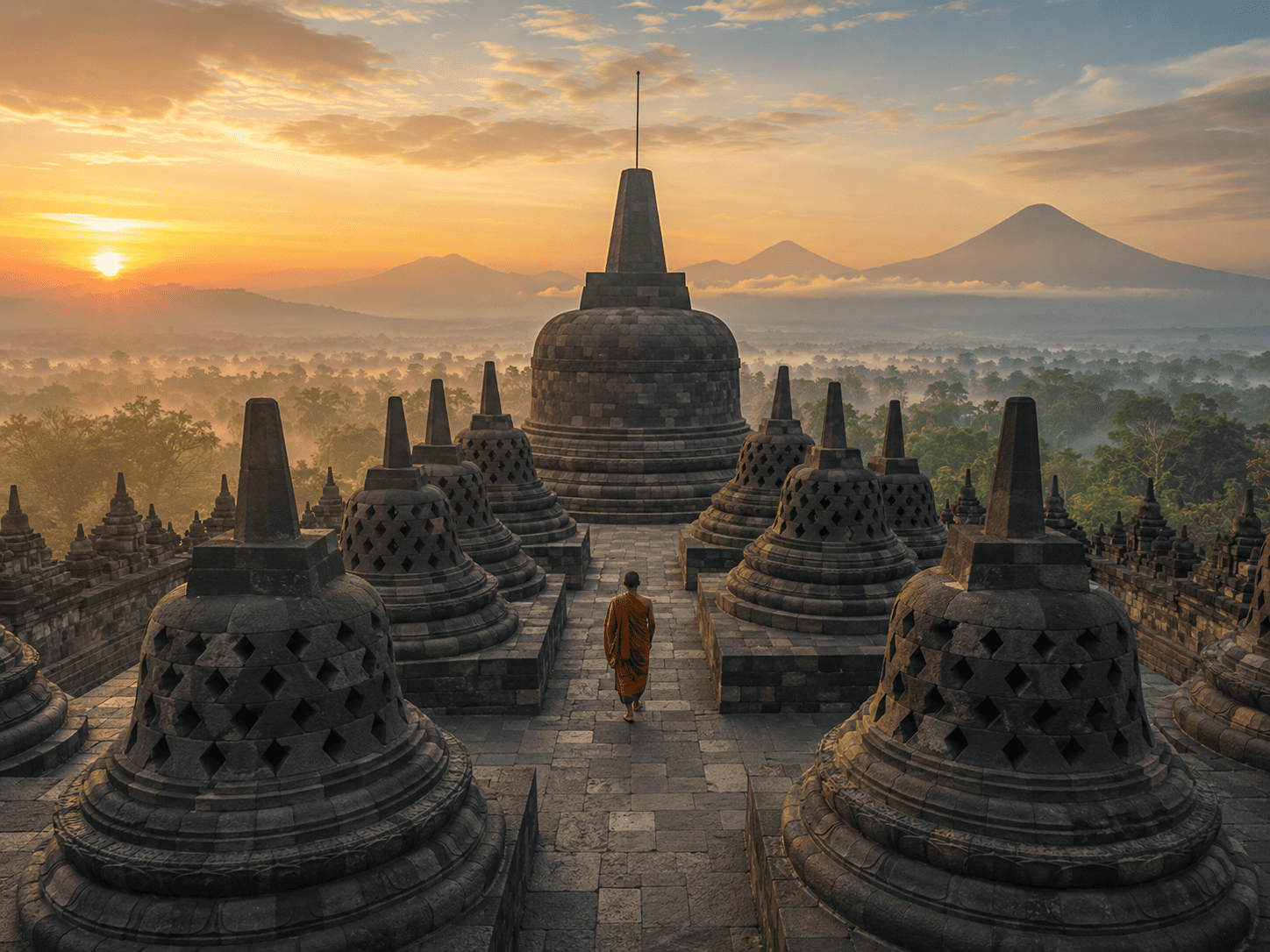
Arupadhatu represents the formless realm. Three circular platforms and the large central stupa form this highest section. The open design creates a calmer atmosphere and suggests movement beyond physical form.
Why Does Borobudur Move Upward?
The upward design gives Borobudur much of its symbolic power. Visitors start near detailed carvings and enclosed galleries. As they climb, the monument gradually offers more open space.
This physical movement mirrors spiritual progress. The journey begins with worldly life and continues toward greater simplicity. Each level changes the visitor’s surroundings and reinforces the idea of inner development.
UNESCO also describes Borobudur as a unique combination of a terraced mountain tradition and the Buddhist concept of attaining Nirvana.
For more historical and cultural context, read our guide to facts about Borobudur Temple. It explains the monument’s history, architecture, Buddhist meaning, and important details.
Reliefs as Symbols of Learning
The relief galleries support Borobudur’s spiritual message through visual stories. They present Buddhist narratives, moral lessons, and scenes from human life.
Visitors traditionally move around the monument while following these carvings. This walking journey connects learning with movement. These narratives invite visitors to reflect on their meaning before moving upward through the monument.
The lower and middle levels contain more visual detail. The upper section uses simpler forms. This contrast strengthens the symbolic transition from complexity toward spiritual clarity.
Buddha Images and Stupas
Buddha statues also play an important role in Borobudur Temple Symbolism. Their hand gestures, directions, and positions carry different meanings within Buddhist tradition.
On the upper circular terraces, 72 openwork stupas each contain a Buddha image. Their repeating forms create balance and direct attention toward the central stupa.
The main stupa crowns the monument. Its position completes the architectural journey through the three symbolic realms.
Experience the Symbolism During Your Visit
Do not rush straight to the highest terrace. Walk through the galleries and notice how the architecture changes as you climb.
A knowledgeable guide can explain details that visitors may otherwise overlook. Travelers who want a deeper experience can explore a private Borobudur tour from Yogyakarta. A guided visit can connect the reliefs, terraces, stupas, and Buddhist ideas into one clearer story.
Take time to observe the monument from different levels. The changing space forms an important part of its meaning.
Conclusion
The Borobudur Temple Symbolism connects architecture, Buddhist cosmology, reliefs, Buddha images, and stupas. Kamadhatu, Rupadhatu, and Arupadhatu create a symbolic path from desire toward the formless realm.
Once you understand these ideas, Borobudur becomes more than a remarkable heritage site. Its design reveals a carefully organized spiritual journey expressed through stone, movement, and space.