
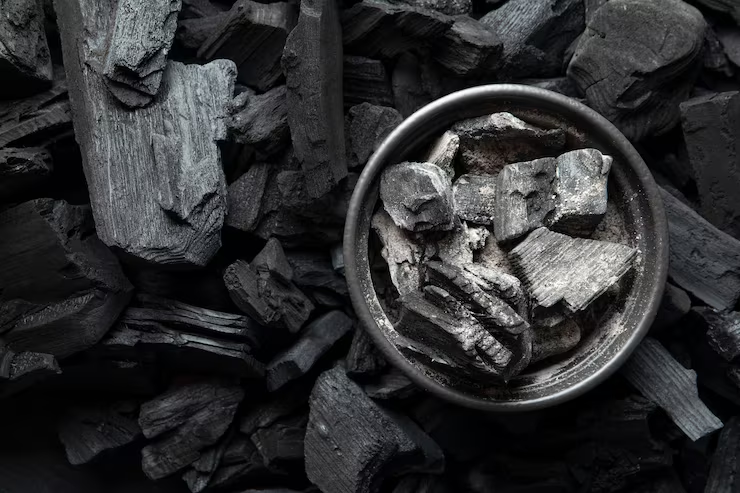
The global demand for eco-conscious energy solutions is growing rapidly, and one of the most promising alternatives is sustainable charcoal from coconut. This type of charcoal is produced using discarded coconut shells, a renewable resource that is abundant in tropical regions.
By transforming agricultural waste into valuable energy, coconut charcoal is not only efficient but also significantly reduces environmental harm caused by traditional wood-based charcoal production.
What Makes Sustainable Charcoal from Coconut Different
Unlike conventional charcoal, which often involves cutting down trees and contributes to deforestation, coconut shell charcoal is produced from byproducts of the coconut industry. Since coconuts are harvested regularly for food, oil, and other uses, their shells would otherwise be discarded as waste.
Moreover, sustainable charcoal from coconut has physical and chemical properties that make it superior for many uses. It is denser, burns longer, produces less smoke, and leaves minimal ash compared to regular charcoal. These advantages make it ideal for cooking, heating, and even specialized uses like shisha or hookah.
Benefits of Coconut-Based Charcoal
There are multiple reasons why businesses and consumers are switching to coconut-based charcoal:
-
Eco-Friendly Resource – No trees are cut down in the process, reducing deforestation.
-
Efficient Burning – It burns hotter and longer, which means less fuel is required for the same task.
-
Low Smoke and Odor – Coconut charcoal produces cleaner emissions, making it healthier for indoor and outdoor use.
-
Renewable and Abundant – With millions of coconuts harvested globally, there is a steady supply of shells for production.
-
Cost-Effective – Longer burning time translates into savings for households and businesses.
These qualities highlight why sustainable charcoal from coconut is gaining attention not only as a fuel source but also as a driver of sustainable development.
The Manufacturing Process
The production of coconut charcoal involves several key steps:
-
Collection of Coconut Shells – Sourced from coconut processing industries.
-
Carbonization – The shells are burned in a controlled, low-oxygen environment to create charcoal without harmful emissions.
-
Grinding and Mixing – The charcoal is ground into fine powder and combined with natural binders like tapioca starch.
-
Compression into Briquettes – The mixture is pressed into uniform shapes such as cubes or hexagons.
-
Drying and Packaging – To ensure quality, the briquettes are dried to remove excess moisture before distribution.
This careful process guarantees that the final product is durable, safe, and consistent in quality.
Global Market and Applications
The demand for sustainable charcoal from coconut is expanding in both domestic and international markets. In countries where shisha or barbecue culture is strong, coconut charcoal is now preferred for its long-lasting and clean-burning qualities. At the same time, it has become a key export product for nations with abundant coconut resources.
For example, shisha lounges, restaurants, and eco-friendly households are increasingly adopting coconut charcoal as their fuel of choice. Businesses looking to explore sustainable energy options can learn more through resources like eco-friendly shisha briquettes.
Contribution to Environmental Sustainability
One of the greatest advantages of coconut-based charcoal is its contribution to reducing deforestation. By providing an alternative to wood charcoal, it helps preserve forests while supporting rural economies that rely on coconut farming. The reduced smoke and emissions also mean cleaner air, making it a healthier choice for users and the environment alike.
Conclusion
The shift to sustainable charcoal from coconut reflects a growing global awareness of the importance of eco-friendly energy sources. This alternative not only reduces reliance on wood-based charcoal but also transforms agricultural waste into a valuable resource.
With benefits like longer burning time, cleaner smoke, and renewable sourcing, coconut charcoal stands out as one of the most sustainable fuel options available today.