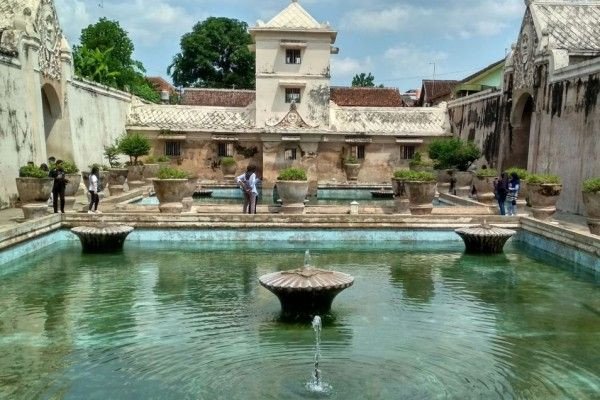
The Taman Sari historical attraction is one of the most fascinating places to visit in Yogyakarta for travelers interested in history and culture. Located near the Yogyakarta Palace, this former royal complex contains bathing pools, distinctive buildings, underground passages, and architectural remains connected to the city’s royal heritage.
Unlike a traditional palace that centers on one main building, Taman Sari consists of multiple spaces with different functions. Exploring these areas allows visitors to discover how architecture, water, and royal traditions were combined within one extensive complex.
The History of Taman Sari
Taman Sari was developed during the eighteenth century under Sultan Hamengku Buwono I. The complex was created as part of the royal environment and included gardens, water features, buildings, and underground routes.
Its original area was much larger than the surviving sections visible today.
These surviving buildings make the Taman Sari historical attraction an important place for understanding Yogyakarta’s royal past.
Travelers looking for more information about the site’s history and main areas can explore this Taman Sari Water Castle complete guide before planning a visit.
Explore the Royal Bathing Complex
One of the most recognizable sections of Taman Sari is the Umbul Binangun bathing complex.
Several pools are arranged within an enclosed area surrounded by walls, gates, and decorative architectural details. The pools were associated with royal bathing and leisure activities.
The architecture surrounding the water creates a distinctive atmosphere. Visitors can observe the relationship between the pools and the structures that once formed part of the royal environment.
The area is also popular for photography because of its symmetrical layout and colorful architectural elements.
Explore Sumur Gumuling
Sumur Gumuling is another highlight of the Taman Sari historical attraction.
The building contains interconnected spaces arranged around a central area. Its design creates an interesting combination of enclosed passages and open sections.
Sumur Gumuling is also traditionally associated with religious activities during the site’s royal period. Its presence demonstrates that Taman Sari served purposes beyond recreation.
Walk Through Underground Spaces
Taman Sari also contains surviving underground passages. These routes were incorporated into the original design and connected selected areas of the complex.
Walking through these spaces provides a various experience from exploring the bathing pools and open courtyards.
The underground structures demonstrate the complexity of the original site. Buildings, water features, gardens, and passages were planned as connected parts of a larger royal environment.
See Pulo Kenanga
Pulo Kenanga is another important surviving structure. Historically, it was part of a water-centered landscape that included an artificial lake.
Exploring Pulo Kenanga can help travelers understand that the complex was once considerably larger and more elaborate than the site visible today.
Appreciate the Architecture
The architecture of the Taman Sari historical attraction reflects various cultural influences. Javanese traditions can be seen alongside other architectural elements that developed through cultural interaction.
Visitors can observe these influences in the gates, walls, stairways, pools, and building layouts.
Taking time to examine these details can provide a better understanding of the craftsmanship and planning behind the former royal complex.
Tips for Exploring Taman Sari
Wear comfortable footwear because visiting several sections requires considerable walking. Some passages may also be narrow or uneven.
Take your time when exploring the site and follow any instructions provided by local staff. Respecting the historic structures helps support their preservation.
Travelers planning other cultural activities around Yogyakarta and Central Java can also consider Borobudur Tours when organizing their itinerary.
Experience Yogyakarta’s Royal Heritage
The Taman Sari historical attraction offers visitors a chance to explore the remains of a former royal environment through architecture, water features, underground passages, and cultural heritage.
Its bathing pools, Sumur Gumuling, Pulo Kenanga, and surviving structures each reveal a various part of Taman Sari’s history. For travelers interested in Yogyakarta’s royal past, the site provides a valuable cultural experience.